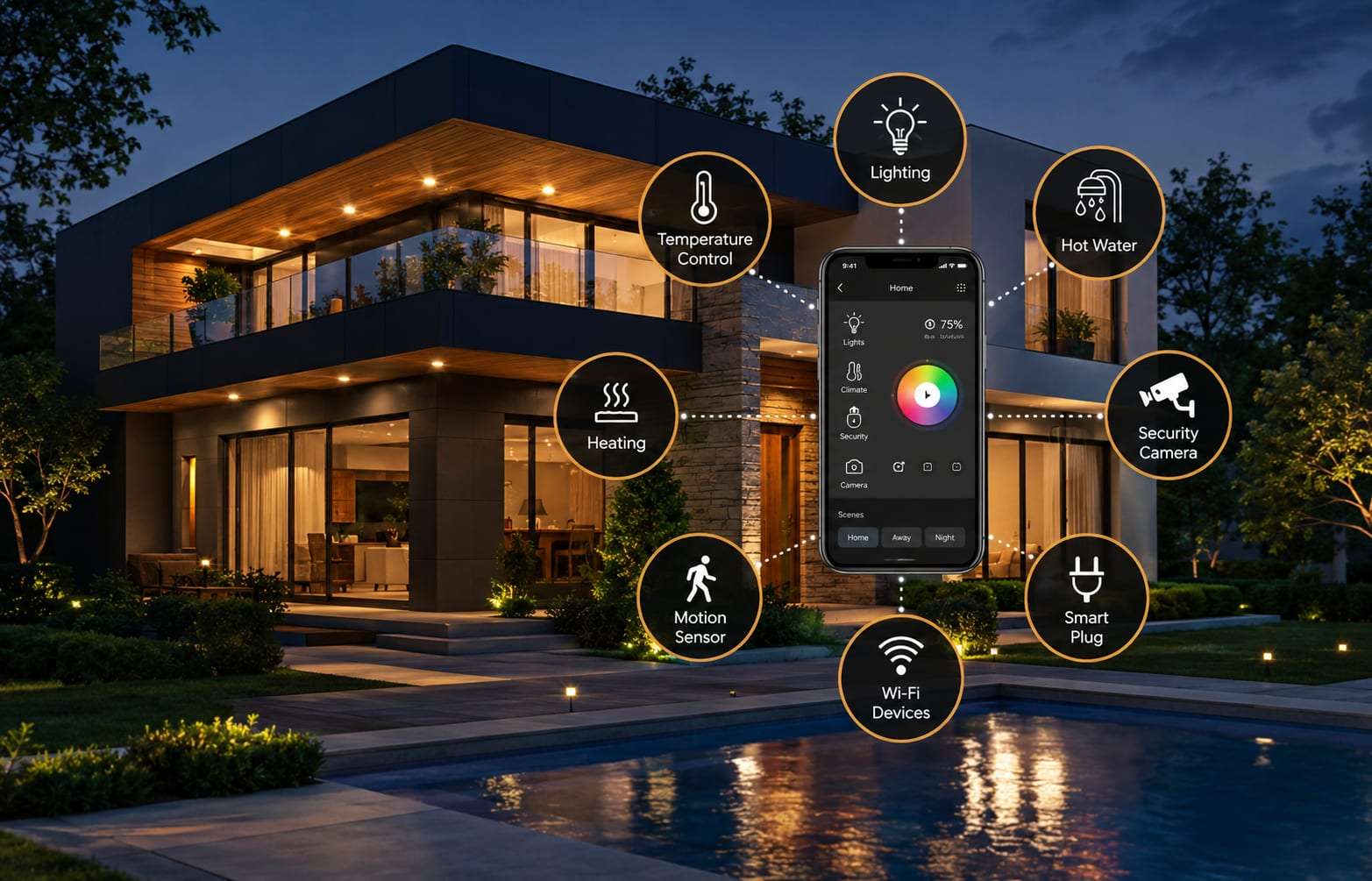
KNX and EIB, end to end
Bus topology, actuator and sensor selection, panel build, addressing and ETS programming, all in house. The database is handed over with the building, so the next change is an edit rather than an excavation.
Every circuit, indoors and out, on one open standard.
KNX, EIB and DALI control of lighting across the whole building envelope. Scenes, occupancy and daylight sensing, dimming and tunable white, astronomical time clocks and energy metering, designed, panel-built, programmed and commissioned by our own Riyadh team on open standards, so the client is never locked into a single vendor for the life of the building.
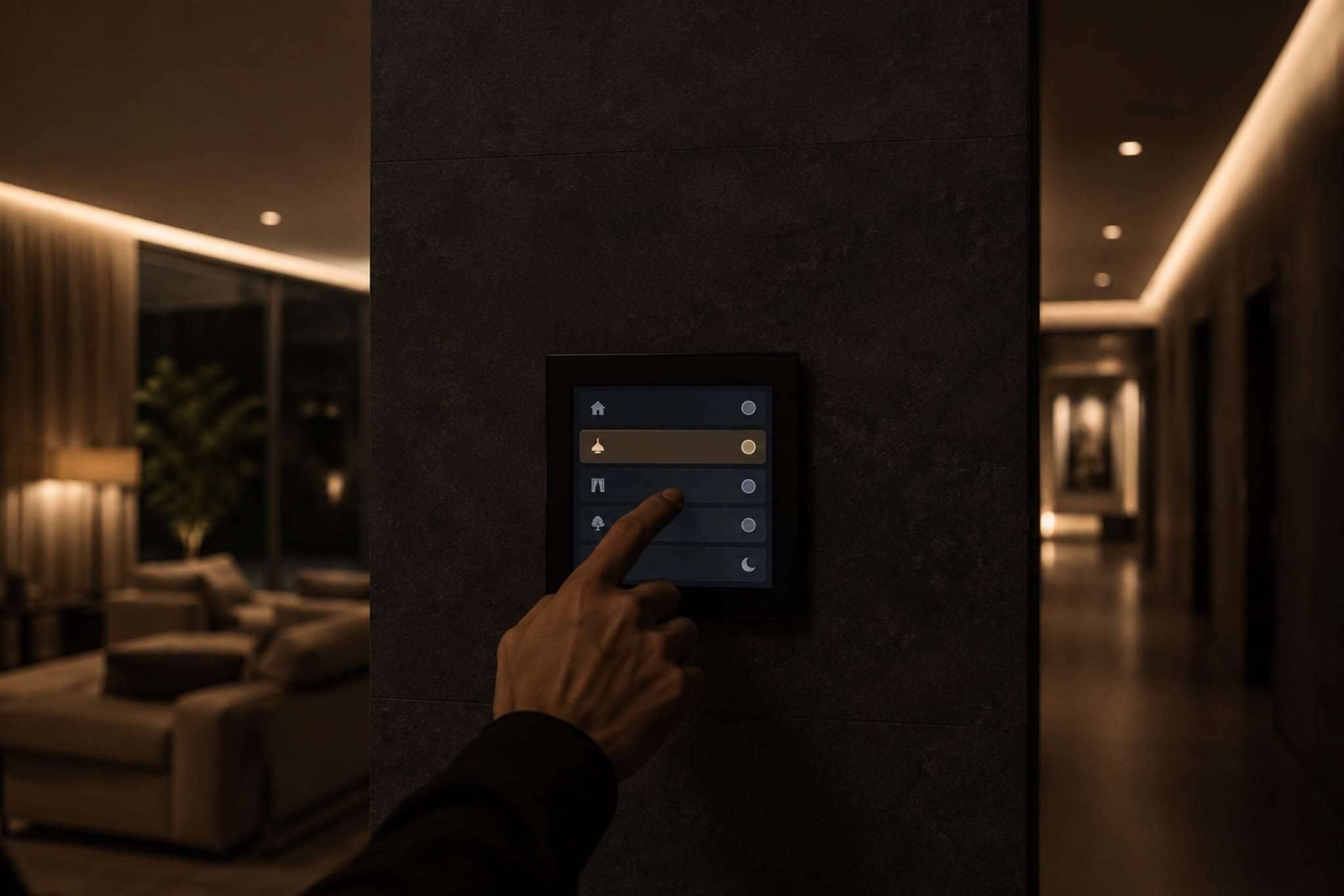
Controls are where a lighting scheme either earns its budget or quietly wastes it. A building with no control runs every circuit at full output for fourteen hours because nobody is paid to walk round switching things off. A building with the wrong control does the same thing, plus the client now owns a proprietary system that one integrator in the Kingdom can service.
We build on KNX and EIB, a worldwide open standard rather than a brand, so lighting, blinds, HVAC, metering and security sit on one bus, and any KNX-certified integrator can pick the system up in ten years' time. Scenes, occupancy sensing, daylight harvesting, DALI dimming, tunable white and astronomical time clocks all come from the same layer, which is also why the car park, the facade and the boardroom can be told to do something together.
Bus topology, actuator and sensor selection, panel build, addressing and ETS programming, all in house. The database is handed over with the building, so the next change is an edit rather than an excavation.
Presence detection on the circuits nobody remembers, daylight harvesting on the ones beside glass, and scenes that a receptionist can actually reach on a button rather than three levels into an app.
Per-fitting addressing, so a single failed driver reports itself instead of being found by a guest. Tunable white where the room's use changes through the day and a fixed colour temperature would be wrong for half of it.
Circuit-level metering logged and reported, which is what an ESCO contract, a green building target or an operating budget review asks for. Savings you can point at rather than savings you assert.
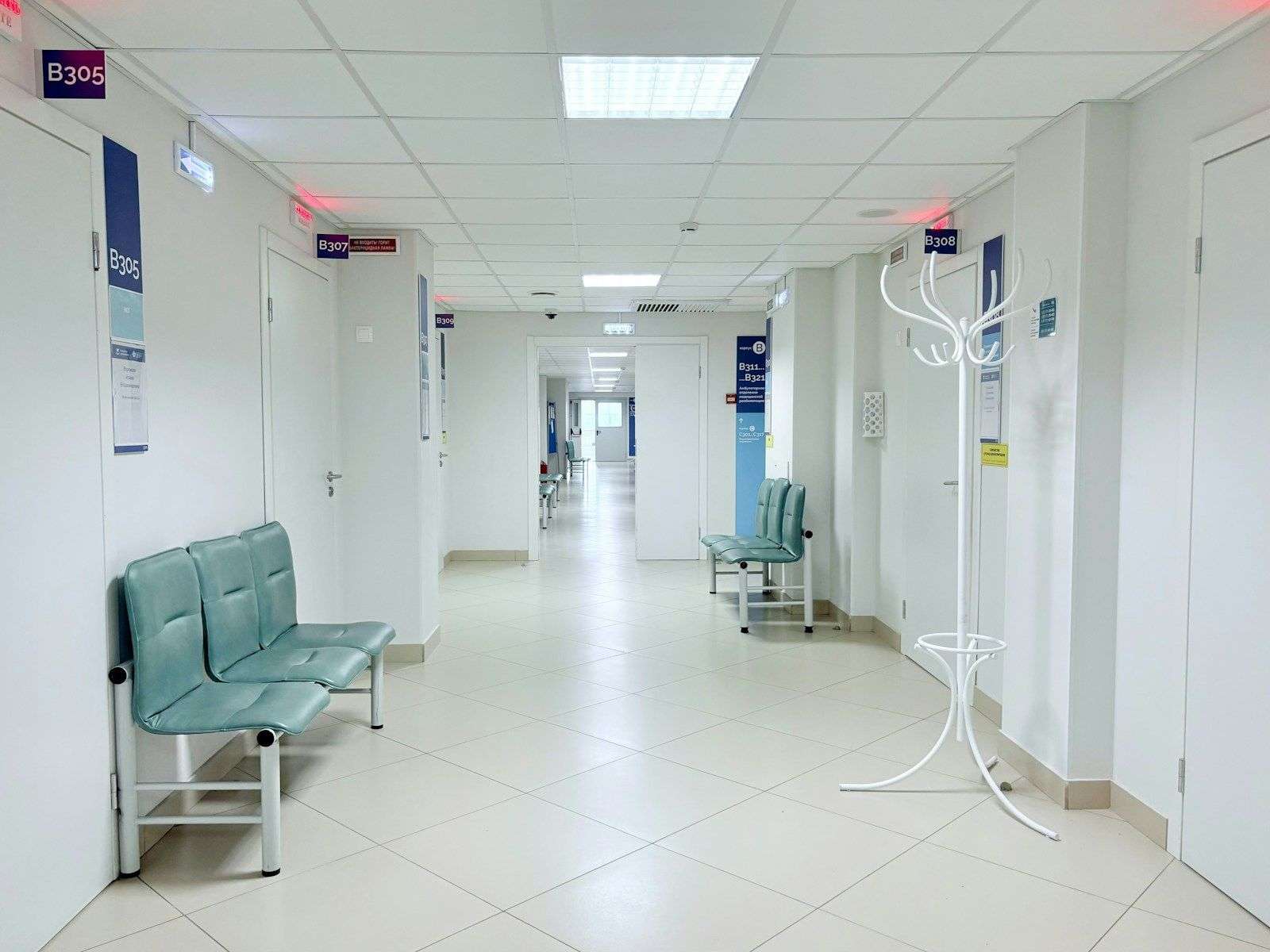
Corridors and wards that never go dark but do not need full output at three in the morning. Night levels, presence control in stores and plant rooms, and fittings that report their own faults before a nurse has to.
On our reference listNaba Hospital, Riyadh
Plus five private palaces and villas in Riyadh, each with KNX lighting control and home automation commissioned by ARAK.
The Saudi Building Code's energy requirements for non-residential buildings (SBC 601) are mandatory, and reviewers increasingly ask for proof rather than intent. Automatic switching, occupancy and daylight control, and circuit-level metering are how a building shows it.
Operators in the Kingdom treat guest-room management as part of the base build, sold on the energy it saves when a room is empty. Planning it with the lighting, not after it, is what keeps it simple.
DALI-2 and D4i drivers carry their own energy and fault data, and the latest KNX releases are built around energy management. A system specified today should be able to read both.
Zones, scenes, schedules and sensor positions agreed with the consultant and the people who will run the building, before a single device is chosen.
Control schematic, riser, device schedule and BOQ, prepared in the consultant's format so the submittal clears review the first time.
DIN-rail panels assembled, wired, labelled and tested in Riyadh, then delivered to the construction programme with the devices that hang off them.
ETS programming, DALI addressing and scene setting on site, with the client in the room, so the scenes are the ones they will actually use.
The project database, as-built drawings and operator training are handed over with the building, and we stay on for changes, spares and warranty.
We pick the platform to suit the project, not the other way round, and all of it sits on open standards.
 ABB
 Lutron
 Zennio
 Hager
 Leviton
 Interra
Diagrams of how these systems are put together, then a panel and a touch screen from our own sites. Click any frame to see it full size.
KNX is a worldwide open standard for building control. Switches, sensors, dimmers and touch panels from many manufacturers share one bus, so lighting, blinds, HVAC and metering can be programmed to work together, and any KNX-certified integrator can service the system later.
Usually both. KNX is the building-wide backbone that ties lighting to blinds, HVAC and scheduling. DALI addresses each fitting individually for dimming, tunable white and fault reporting. A gateway joins the two, and we specify where each one belongs.
Yes. We survey the existing circuits and distribution boards first, then retrofit with panel-mounted actuators, DALI drivers or wireless devices where rewiring is not practical. Most retrofits are phased floor by floor so the building stays in use.
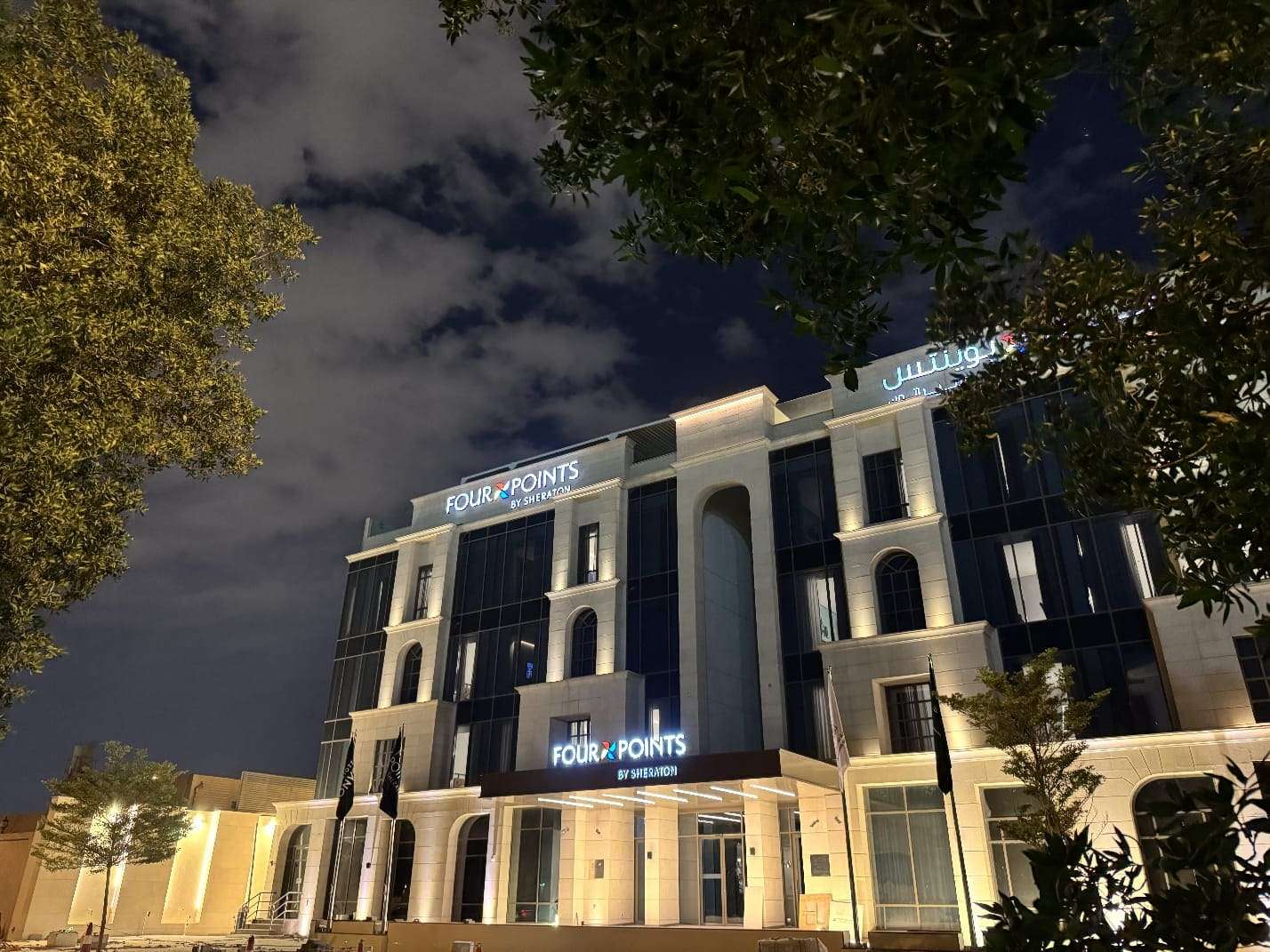
Yes. Guest room management runs on the same KNX platform as the lighting control: room lighting, key-card presence, curtains and cooling, with each room's status visible at the front desk. Four Points by Sheraton in Riyadh is on our reference list.
We program in house and commission on site with the client present. At handover you receive the project database, as-built drawings and operator training, so the system is yours. We remain available for changes, spares and warranty support.
It depends on how the building is used: a hotel corridor and a 24-hour control room save very different amounts. That is why we meter at circuit level, so the saving is measured on your own building rather than quoted from a brochure.
A lighting layout or reflected ceiling plan, the DB schedules if you have them, and a short note on how each space is used. We reply with a control schematic, a device schedule and a quotation.
A layout, a DB schedule or just the scenes you want is enough to start. Our Riyadh controls team replies with a control schematic, a device schedule and a quotation.
Request a controls proposal